




Day One
2019
2019
2019
2019
2020
2020
2021
2021
2021
2022
2022
SEMA AWARD
NOW
WHERE IT STARTED
BORN FROM A SIMPLE NEED.
It all started with a need from one of our team, Nick. He wanted a soft truck cap that could keep his camping and fishing gear dry without hard-shell prices, while still carrying weight on the roof.
Existing soft caps simply weren't built like this. They offered basic weather protection but lacked the structural integrity to carry gear up top. Even worse, most designs made reaching your cargo a hassle. What Nick wanted was clear: a heavy-duty, load-bearing frame that still allowed for full truck bed access. A solution where you didn't have to choose between carrying a load and being able to reach your gear.
So that’s what we did! We built it ourselves. We designed a soft truck cap that protects your gear, installs easily, and is engineered from the ground up to be load-rated with full accessibility.
And just like that, WildTop Truck Caps was born.

Finite Evaluation Analysis (FEA) structural modeling of a high-load soft top frame.
OUR MISSION
SOLVING THE IMPOSSIBLE.
We realized a load-rated soft top didn't exist, and the reason was obvious: it's basically a contradiction.
We wanted a frame strong enough to carry thousands of pounds, but light enough to install yourself in your driveway. It had to be flexible enough to open from three sides, and tough enough to survive the Australian Outback.
No one in the industry had solved it. Most hadn't even tried.

Producing prototype parts via 3D printing for functional testing and design validation.
DESIGNING FROM THE GROUND UP
PRINT. TEST. IMPROVE. REPEAT.
Innovation starts where traditional manufacturing ends. Before we moved into production, we utilized high-precision 3D printing to prototype every single component. This let us perfect every curve and structural detail, testing dozens of iterations of wall thicknesses and gusset angles—something impossible with old-school methods. By 'failing fast' during the prototyping stage, we ensured that every part was optimized for strength and fit before the first production run ever began. We didn't just build it, we engineered it to be better.
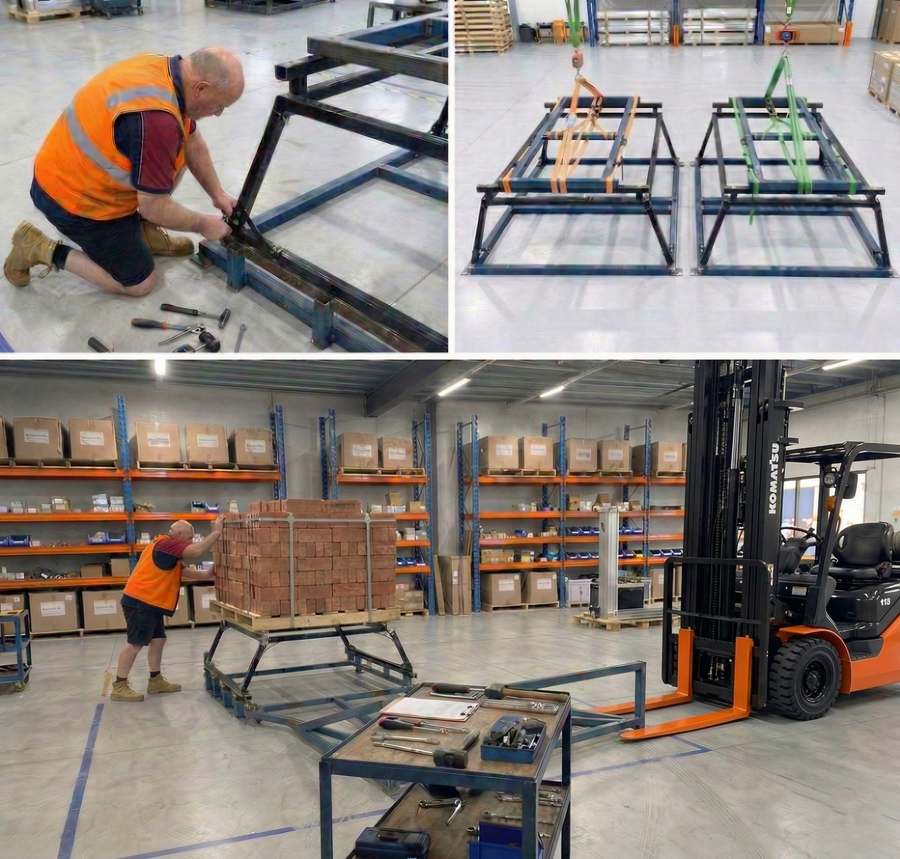
Performing vertical Lift resistance, and Static load capacity tests up to 2,800 lbs
BRINGING THE DESIGN TO LIFE
From Prototype to Precision
Our first prototype frames were built by hand, bolted straight to the concrete floor, and loaded by a forklift until the metal gave out. We identified exactly where the structure yielded, redesigned those weak points, and repeated the process until the destruction became data. This iterative "test-to-failure" approach evolved into a technical engineering program designed to not only meet but exceed the testing standards.
We subjected the design to Static Weight and Lateral Load testing at a 20° longitudinal axis to replicate the aggressive twisting forces of corrugated tracks. To ensure the frame remained anchored against aerodynamic suction at highway speeds, we performed Lift Resistance testing alongside Emergency Braking and Crash Tests to evaluate structural integrity during high-G deceleration. After more than a dozen iterations, we locked in a design featuring 3mm steel gussets, aluminum framing, and custom cast aluminum corners to ensure the system remained secure under the most extreme mechanical stresses.

Heavy-duty canvas selected for its durability and world-class quality, sourced from the same supplier used by the Australian Army.
THE FINAL LAYER
Engineered to Match the Frame.
After over-engineering the frame, we needed a skin tough enough to wrap it in. The canvas had to handle punishing UV, rain, snow, dust, and constant flexing. Who knows more about surviving extreme conditions than the Australian Army?
That question led us to Canberra, where we partnered with the exact supplier that makes canvas for the military. If it’s built for combat deployments, it’s built for your truck bed. Our 16oz Australian-made canvas is completely waterproof, highly breathable, double-stitched at every seam, and engineered to hold perfect tension through years of daily abuse.

The final components engineered, refined, and proven through rigorous development and testing.
THE DETAILS
EVERY COMPONENT EARNED ITS PLACE
Custom cast aluminum corners. 3mm steel gussets. Precision-formed mounting brackets. Stainless steel and zinc-coated rust-proof fasteners. Every component in the frame system was engineered, tested, and reselected until it met our standards.
TESTED TO DESTRUCTION
WE DIDN'T JUST ENGINEER TO PASS.
Born in the Australian Outback, one of the harshest environments on Earth, every WildTop goes through a punishing series of trials designed to find weak points, not confirm strengths.
We simulate real-world forces and deliberately drive the structure far beyond its expected limits to understand exactly where it will fail. Every result feeds directly back into the design, strengthening the system until the weak points are engineered out.
Our evaluation protocol examines the frame under the full range of stresses it will experience in the wild. Dynamic load simulations replicate the constant vibration, impacts, and shifting forces that occur while driving on rough tracks and corrugated roads. We conduct resistance-to-lift assessments to ensure the system remains securely anchored even when aerodynamic forces attempt to pull it upward at highway speeds. Slide resistance analysis replicates the extreme loads created during heavy braking, while off-angle trials at 20° to the longitudinal axis simulate the forces that occur when cornering or traveling across uneven terrain. Finally, we perform static load validation that applies extreme vertical weight to the structure, confirming it can support far more than the demands of real-world cargo.
This rigorous process goes well beyond proving the product works. By forcing the structure to its absolute limits, we gather the data needed to refine, reinforce, and continuously improve the WildTop platform.
The result is a system engineered not just to meet expectations, but to exceed them.

Lift Resistance Testing to simulate the upward force of 2,200lbs (1,000kg) experienced when you're driving with a full load on the roof of the topper.
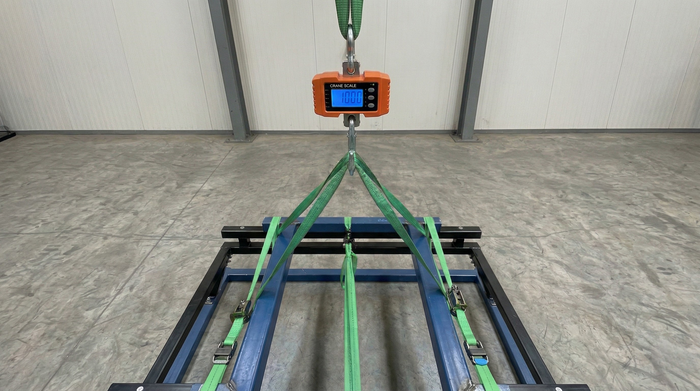
Lift Resistance Testing to simulate the upward force of 2,200lbs (1,000kg) experienced when you're driving with a full load on the roof of the topper.
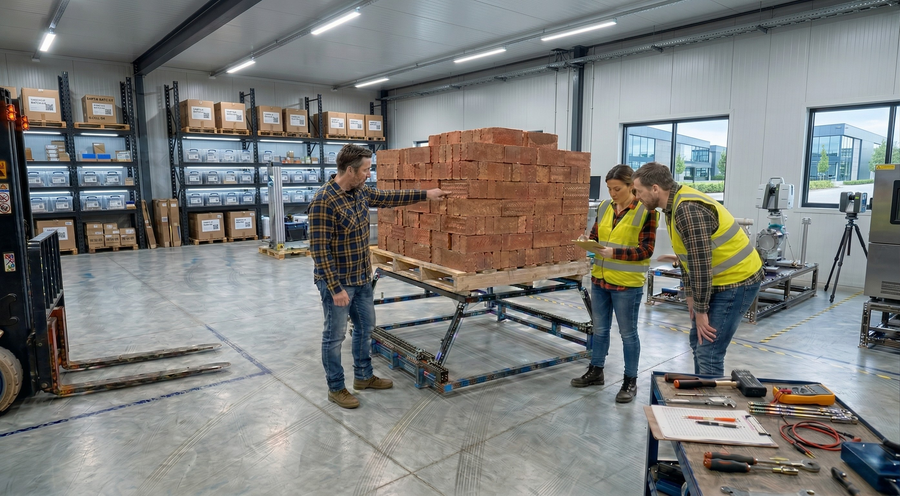
Our team inspecting the flex and stability of the frame while loading it with extreme weights.
LOAD TESTING.
We simulated forces on the frame, applying both static and dynamic loads and increasing them until failure. We deliberately pushed the structure well past its requirements, right to the point of breakage, to learn exactly where it would give.
The data from each test showed us precisely where the structure was failing, and that fed directly into the next redesign.
In final testing, we applied 2,800 lbs of weight to the frame. It didn't buckle, bend, or give — the frame held solid.
We didn't just build a cap to handle your heaviest gear. We built one strong enough to carry the truck itself.

Our extreme car wash test simulating different weather systems and environments.
TESTED TO EXTREMES
SHIELDED FROM THE STORM.
We meticulously tested every single seam, zipper, and seal for potential leak paths, subjecting them to high-pressure water from every conceivable angle for hours on end. When a failure occurred, we didn't just patch it. We traced the exact point of ingress back to its root cause, completely redesigned the section, and ran it through the entire testing protocol again until the seal was perfect.

Mounted cameras and lights allowed us to detect even the smallest drop of water entering the bed.
PROVEN PERFORMANCE
CAMERAS INSIDE.
WATER OUTSIDE.
We don’t just claim it’s waterproof; we prove it. Our seals are engineered to withstand the most extreme high-pressure barrage without letting a single drop through. When the weather hits, your gear stays bone-dry. No leaks, no compromises—just total protection for your cargo.

SEMA AWARD WINNER
WildTop Truck Caps is the proud recipient of the 2023 SEMA TORA Award for the Light Truck New Product Category.
INNOVATION NEVER STOPS
SETTING THE STANDARD.
THEN BREAKING IT.
When we launched WildTop, our goal was simple: build a soft top that was also load-rated. It had to survive the dust, corrugated tracks, and constant use. That original product set the bar for what we expected from ourselves, but we’ve never been the type to leave a design alone once it’s "good enough."
Right now, we’re pushing those limits further. Innovation for us isn’t a boardroom discussion; it’s a process of taking prototypes to the extremes, seeing where they fail, and refining them. We break things on purpose so they don’t break when you're using your gear.
We aren’t waiting to see what the rest of the industry does, we’re building solutions designed for you today.